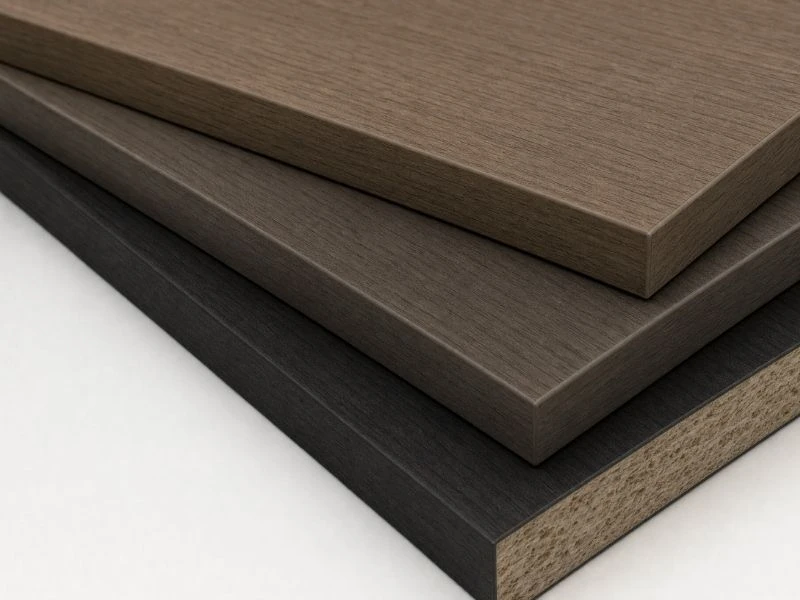
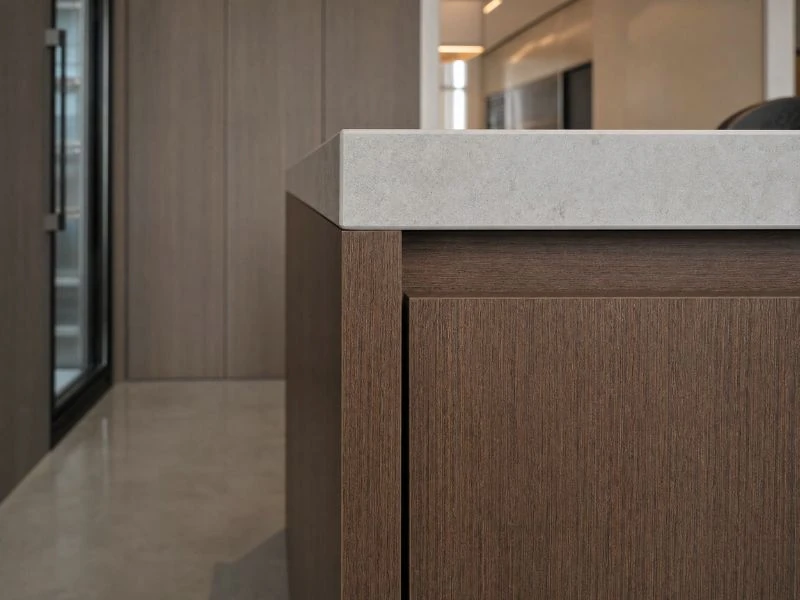
Finish samples are almost always specified face up. We hold the sheen to the light, run a hand over the texture, and check the decor against the broader palette. But the edge, where the panel is actually constructed, usually goes unexamined.
That is a missed opportunity. The edge carries more information about how commercial joinery will perform than the surface does. It is the first part of a panel to meet a mobile pedestal, an ergonomic chair arm, or commercial cleaning equipment, and it is the primary barrier preventing moisture ingress. It is also a definitive marker of a manufacturer’s commitment to internal quality control.
Three primary edgebanding methods dominate Australian commercial joinery: EVA, PUR, and Laser (zero-joint). The difference between them comes down to the bonding agent, and understanding these distinctions changes how you specify joinery, evaluate tender submissions, and protect project longevity.
Three methods compared
When a panel is cut to size, its core substrate is exposed. Edgebanding seals that edge using a continuous strip of PVC, ABS, polypropylene, acrylic, or natural timber veneer. In a single continuous machine pass, the panel is pre-milled square, the edgeband is applied under high pressure, and the profile is trimmed, scraped, and buffed flush.
While the mechanical sequence is standard across the industry, the adhesive bond determines structural integrity.
EVA is a traditional hot-melt thermoplastic adhesive heated between 170°C and 200°C.
PUR is a chemical bonding agent that completely transforms edge performance. Applied at lower temperatures (120°C to 140°C), it reacts chemically with ambient moisture and moisture within the board substrate over 2 to 5 days, cross-linking into an irreversible thermoset polymer.
| Feature | EVA (hot melt) | PUR (polyurethane reactive) |
|---|---|---|
| Bond type | Physical (thermoplastic) | Chemical cross-linking (thermoset) |
| Thermal resistance | Re-softens at ~80°C | Heat resistant > 120°C |
| Moisture / steam resistance | Moderate to low | High (ideal for wet and breakout zones) |
| Glue line visibility | Visible glue line; discolours over time | Micro-thin; virtually invisible |
| Chemical resistance | Vulnerable to harsh cleaners | Resistant to commercial cleaning agents |
Because PUR is applied at a much lower viscosity, it requires roughly one-third the glue volume of EVA, creating a micro-thin bond line that is visually seamless and highly resistant to steam, humidity, and commercial cleaning chemicals.
One quieter detail is worth knowing: because PUR draws part of its cure moisture from the substrate, a very dry board slows the reaction. Board moisture content is a genuine production variable, not a footnote.
Laser edging works on a different principle again, since it eliminates traditional liquid adhesives altogether.
Instead of applying a glue bead, the edgeband is manufactured with a colour-matched, co-extruded functional layer on its reverse face. High-energy lasers melt this functional layer a fraction of a second before it meets the panel, fusing the band directly to the core material.
Why it matters
2009
Homag introduces laserTec, in partnership with Rehau
60 m/min
Line speeds across PVC, ABS, polypropylene, acrylic and melamine bands
~20%
Lower energy use than conventional edgebanding, per Homag
Homag introduced its laserTec system in 2009 in partnership with Rehau, and the technology now runs PVC, ABS, polypropylene, acrylic and melamine bands at line speeds up to 60 metres per minute. Homag puts energy consumption around 20 per cent below conventional edgebanding, largely because there is no glue tank to heat, monitor or clean.
When specifying commercial joinery, the choice of edge detail must align with room geometry, substrate selection, and expected physical impact:
At our custom manufacturing facility in Smithfield, Sydney, Krost produces commercial joinery engineered to survive the demands of modern workplace environments.
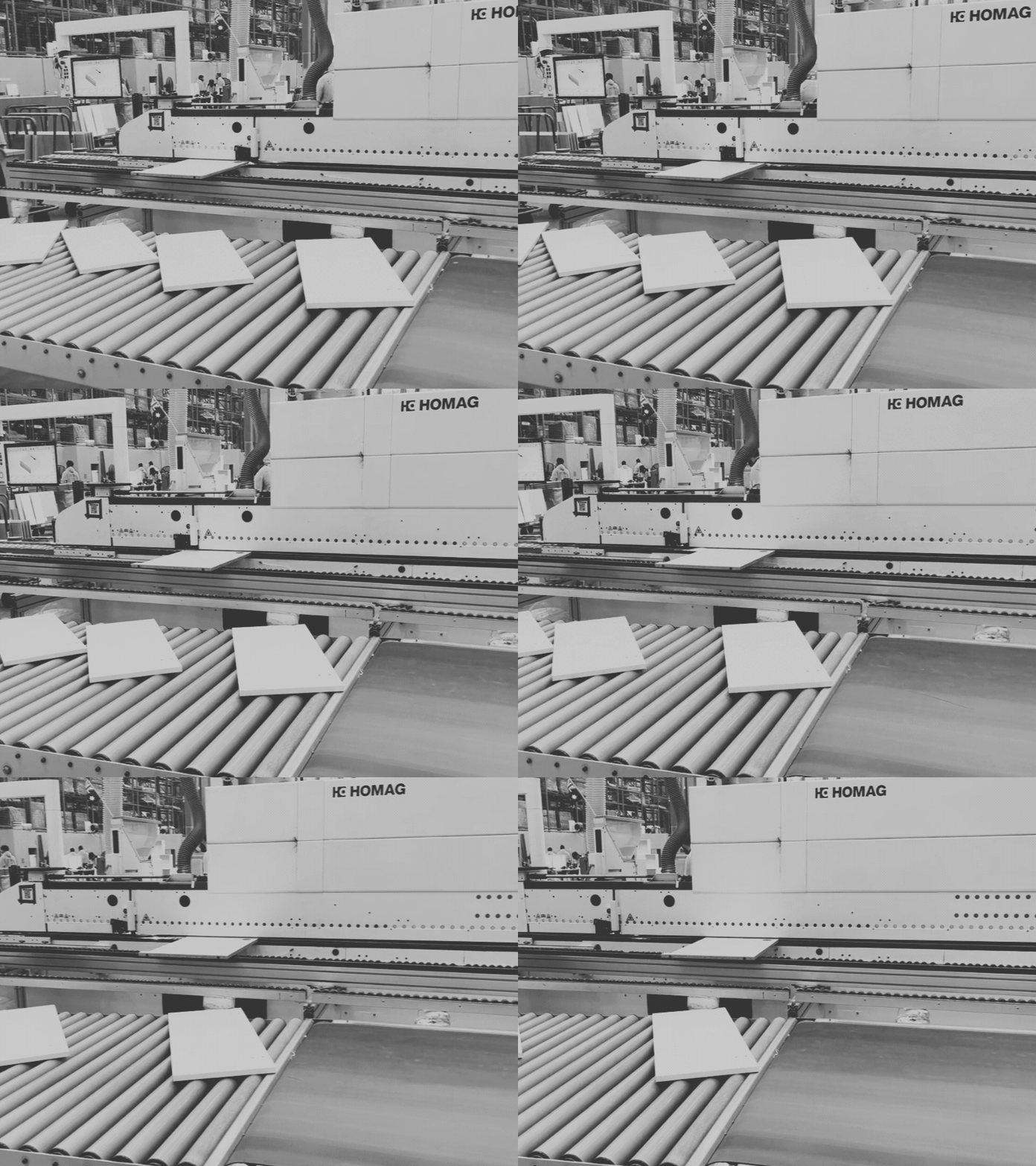
Our edge banding production line utilises advanced German engineering, operating twin Homag edge banders, featuring dual PUR and laser capabilities on a single platform.
Unlike standard market practices that treat premium edging as an upgrade, PUR is the baseline standard across all Krost manufactured joinery.
Operating a daily PUR line requires rigorous manufacturing discipline: the machinery must be purged, sealed, and cleaned at the end of every production shift to prevent chemical curing inside the applicator. This unglamorous daily routine guarantees that every desk, workstation, and storage unit leaving our Sydney factory delivers maximum moisture resistance and clean visual aesthetics.
For specifiers seeking absolute zero-joint perfection, Krost’s laser-edge capability on solid black and white decors delivers an uninterrupted profile with zero visible seam. Achieving a flawless zero-joint finish requires extreme precision:
It is easy for joinery to look pristine on day one in a showroom render. The true test of commercial furniture is how it performs in year eight, after years of foot traffic, cleaning routines, and daily office activity.
By combining state-of-the-art Homag technology, local Sydney manufacturing, and an uncompromised commitment to PUR and laser edgebanding, Krost ensures your commercial projects deliver long-term structural durability, refined aesthetics, and true peace of mind.
Explore Krost’s Australian-made commercial workstation and storage ranges, or contact our Sydney, Melbourne, and Brisbane teams to request technical specifications for your next project.
.webp)
Get expert advice for your next project.
Order our latest print or digital guide.
Shop in-stock items for immediate dispatch.


.webp)