
June 24, 2026

Designing for Education: What the Best Learning Environments actually get right

Details

A learning environment can look entirely correct on a floor plan and still feel dysfunctional once the academic calendar gets underway. The curriculum shifts, a hybrid timetable lands, and a space documented for quiet focus is suddenly required to host a high-energy collaborative workshop. Education interiors live or die within this operational gap, which is precisely where the most interesting design work happens.

Forget the rigid "cells and bells" classrooms of the past; modern educational design is all about radical agility and student-proof resilience. Engineering a high-performance environment must withstand heavy, repetitive wear while actively reducing cognitive fatigue.

Every surface needs to survive the ultimate durability test, every layout must shift from a lecture to group work in under two minutes, and acoustics must be dialed in perfectly to keep students focused. If a piece of furniture can't adapt, roll, or take a beating, it simply doesn't belong in the modern classroom.

Agility as a structural priority, not a feature
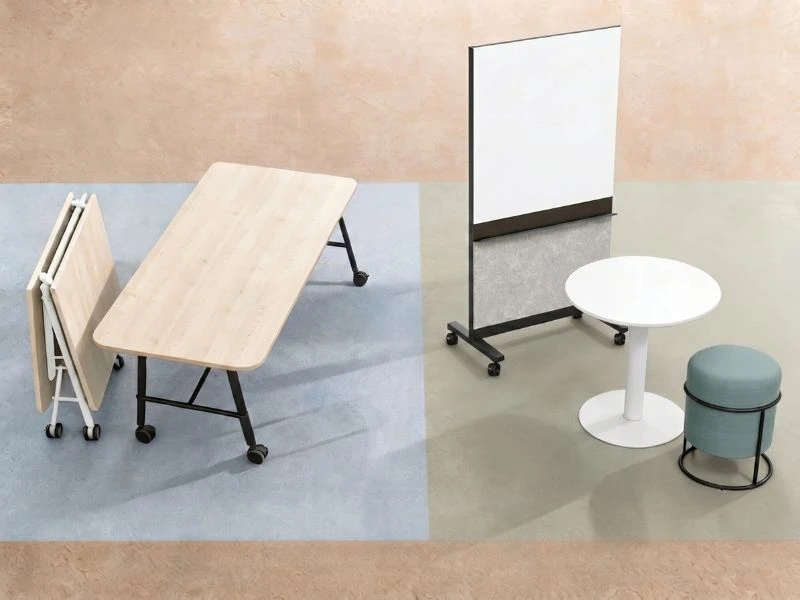
The most resilient educational spaces share a common trait: they can be reconfigured between classes by the occupants themselves, without facilities intervention.

Multi-directional tables like the Tam Tam range allow furniture to move with the day rather than dictating it. An intuitive folding mechanism and lockable castors let a room transition from a formal lecture layout to independent study clusters, then fold flat against the wall for an evening event. Crucially for high-traffic education sectors, the mechanism locks securely in both user states, while an integrated safety system prevents finger pinching during fast transitions. It provides structural reliability where rapid changes are part of the daily timetable.

This mobile logic extends to vertical surfaces. The Explorer mobile board system means ideation surfaces are no longer tethered to the front of the room. Configured as a dual glass-and-pinnable PET unit or an integrated multimedia screen partition, these mobile boundaries let designers create flexible learning zones that subdivide or open up on demand.

Eliminating the trade-off between Durability and Design
There is an outdated assumption that institutional durability requires an aesthetic compromise. Educational furniture must withstand intense, high-traffic wear, while also speaking to an increasingly mature student demographic that expects hospitality-inspired finishes.

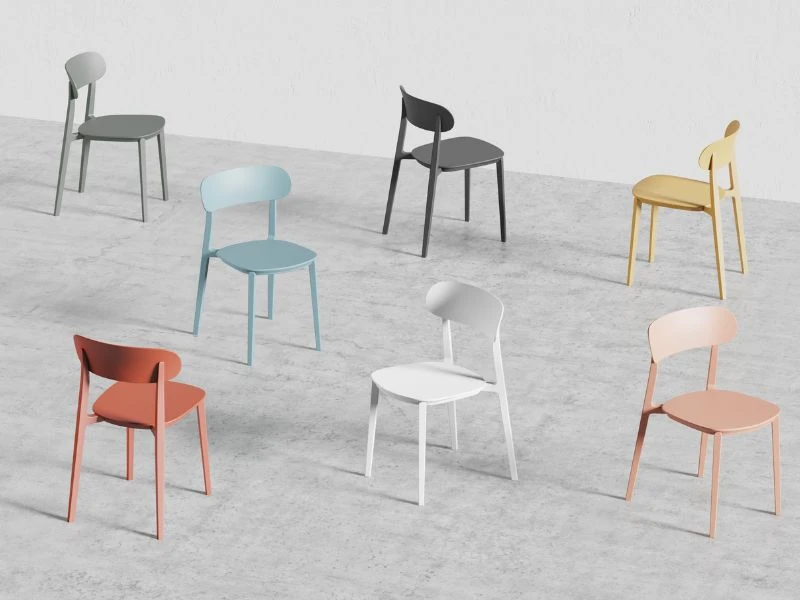
The seating vocabulary chosen for a library breakout or a tertiary common room dictates how adult the space feels. Specifying structural seating like the Poppi chair, moulded from certified Ocean Bound Plastic and reinforced with fibreglass, resolves the tension between environmental utility and refined design. Rather than resorting to a primary-school palette, these pieces use sophisticated, desaturated tones that integrate into a curated architectural scheme.

Where high-density transit spaces demand strict footprint control, stacking lines like Kobi and Koko maintain clean rows via integrated linking systems, disappearing into storage without dominating the visual landscape of an auditorium or refectory.
Programming the in-between spaces

Some of the most critical square metres on a contemporary campus or public library exist entirely outside the formal, bookable classrooms. Corridors that widen into collaborative nooks, transition landings, and foyer zones are where spontaneous learning and post-lecture discussion actually take place.

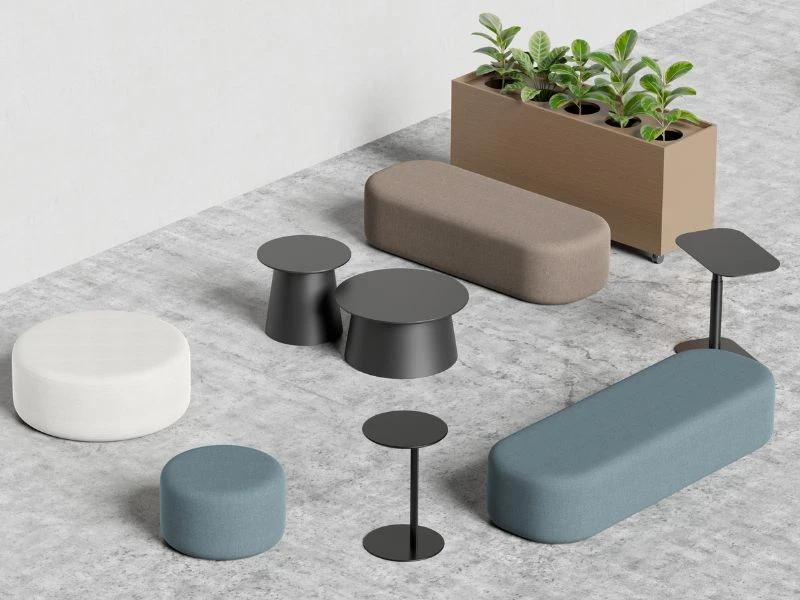
To make these circulation zones feel intentional rather than like an overflow afterthought, designers reach for modular seating systems that scale in fluid geometric shapes. Modular ottoman configurations like the Sofi series let designers build custom upholstered seating landscapes that wrap around structural columns or trace the perimeter of a staircase. Integrated commercial-grade GPO and USB-C power within the base structures turns transitional square metres into functional, self-directed study hubs.

Materiality with Intent: Palette and Performance

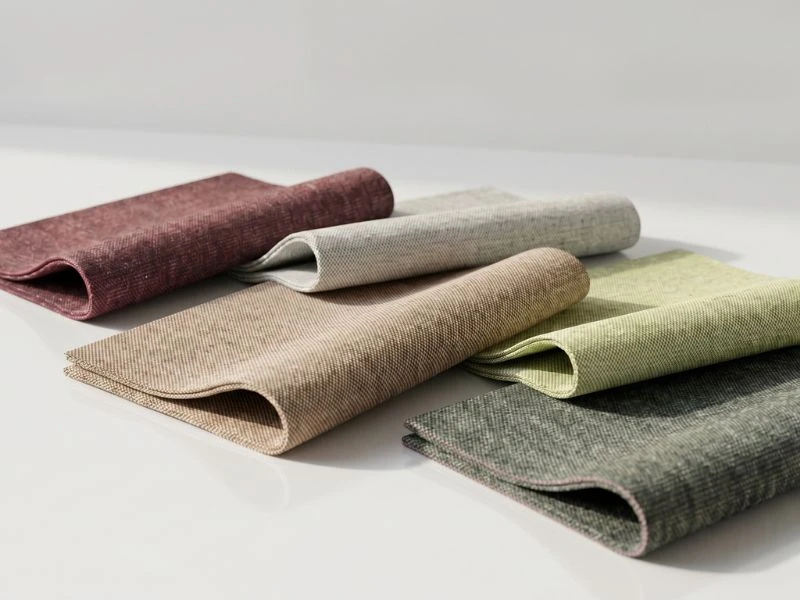
The choice of textile is where an educational brief either aligns with contemporary hospitality standards or reverts to institutional predictability. Education spaces demand a highly specific fabric vocabulary: materials that offer dense tactile interest, from deep, multi-tonal structural weaves to premium soft bouclé, while easily meeting heavy commercial soil and wear ratings.

The palette must follow the same maturity. Moving away from traditional primary schemes, the focus shifts to a curated landscape of sophisticated, desaturated tones, muted ocean blues, sun-bleached earth terracottas, and structured stone greys. These colours are specified not merely to fill a space, but to manipulate the visual volume of a room, allowing open-plan common spaces to feel grounded and break-out environments to feel inherently calm.

------------------

From concept to canvas, our new Krost Virtual Pinboard feature is where early thinking gets sharp. It acts as a dedicated digital workboard for architects and designers to pull visions, products, test finishes, and coordinate palettes seamlessly into a single, presentation-ready scheme.

Krost supports commercial interior designers and architects by supplying tailored office and education furniture solutions backed by local manufacturing with showrooms across Sydney, Melbourne, and Brisbane.

Related Articles

Take the Next Step

Ready to move forward? Request a physical catalogue, visit our online store, or talk to one of our experts today.
Talk To an Expert

Get expert advice for your next project.

Request a Catalogue

Order our latest print or digital guide.

Ready to Order?

Shop in-stock items for immediate dispatch.