
October 15, 2025

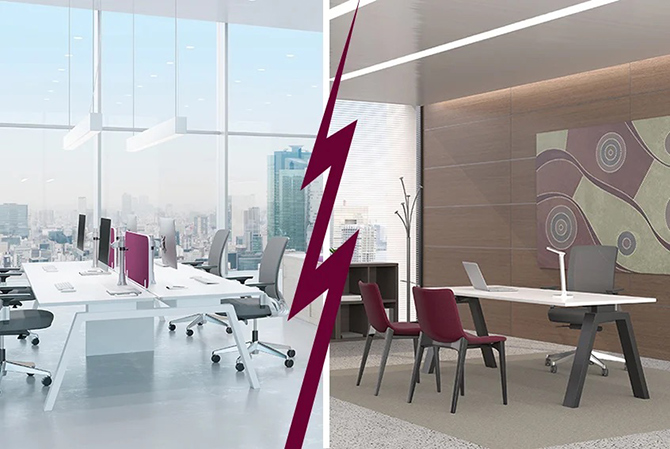
Open vs closed plan offices

Details

When designing new offices, one of the main questions concerns the office layout. The open versus closed office debate has raged over the last few years. It seems there is not a “one-size-fits-all solution” for every business. Instead, there is a need to understand the needs and functions of employees to design a workplace that will enhance wellbeing and productivity.

We’ve compiled a list of key advantages and disadvantages for each preference to help you weigh the options for your organization.

Closed offices

Advantages:

  • Privacy: employees can enjoy complete privacy, take a phone call, conduct meetings
  • Concentration: facilitate concentration by shielding from distractions, fewer interruptions and reducing the surrounding noise
  • Space: closed offices often offer a larger work area

Disadvantages:

  • Space consumption: significantly more space is required, which will impact the company’s spend, particularly in big cities where real estate prices are higher. The cost of building also increases with extra walls, air conditioning and extra lighting required
  • Low supervision: it is more difficult to supervise each employee in private offices, however, this is often a positive point allowing for greater responsibility, trust in employees and independence
  • Low communication: closed offices do not encourage easy communication and impromptu face to face meetings between employees
  • Isolation: employees can easily feel isolated and not “in the loop” in closed offices

Main Blog image

Open plan offices

Advantages:

  • Communication and collaboration: the absence of walls in open offices encourages employees to interact regularly in an informal setting, increases collaboration and can also lead to business innovation
  • Team spirit: open offices provide employees with a sense of belonging and being part of a community, improving employees’ morale and productivity.
  • Optimum use of space: more employees can be accommodated in less space therefore reduces the company’s spending

Disadvantages:

  • More distractions: open offices present more opportunities to get distracted and become less focussed on the task at hand
  • Lack of privacy: computer screens are easily visible and phone conversations overheard in open plan offices
  • Noise: offices can become noisy and make it more difficult to concentrate and may require acoustic solutions.
  • Egalitarianism: the hierarchy is less obvious in open plan offices since everybody works in the same space

Today’s workplace seems to be shifting more towards open plan offices; however, this doesn’t mean that closed office plans are dead. Recent research suggests that certain personality types are differently suited to closed and open planned working spaces.

We will explore Activity Based Working in next week’s blog post, so stay tuned.