

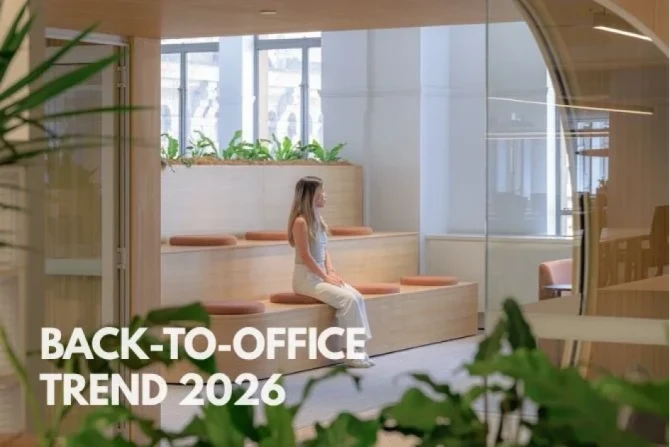
Rather than using the office for individual desk-based work, teams are prioritising in-person time for shared activity. This shift is changing how workplaces are planned, with greater emphasis on spaces that support interaction, movement and collective work rather than fixed, individual workpoints.
How this shift is reshaping office layouts:
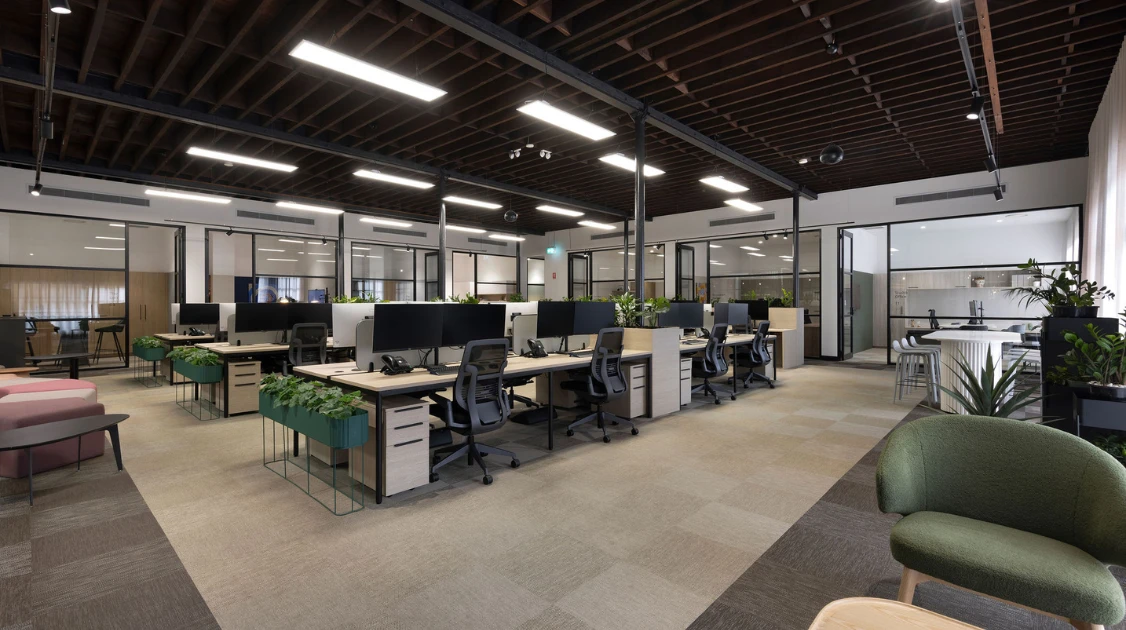
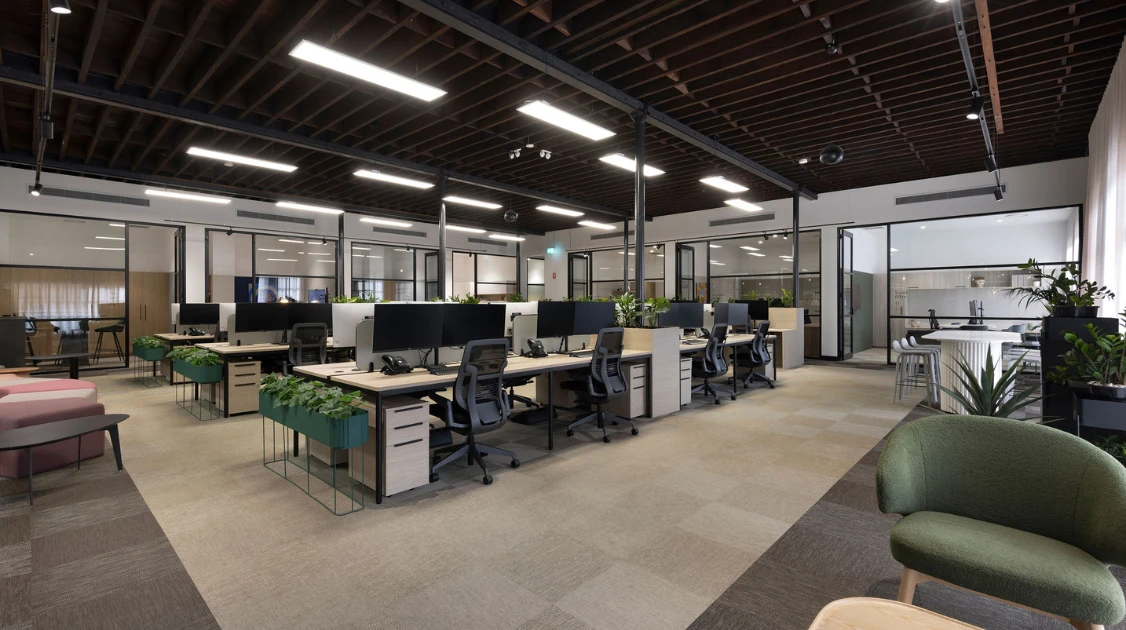
- Desks become a support function, not the centrepiece. Individual workpoints still exist, but they no longer shape the workplace. Space is rebalanced around how people actually use the office.
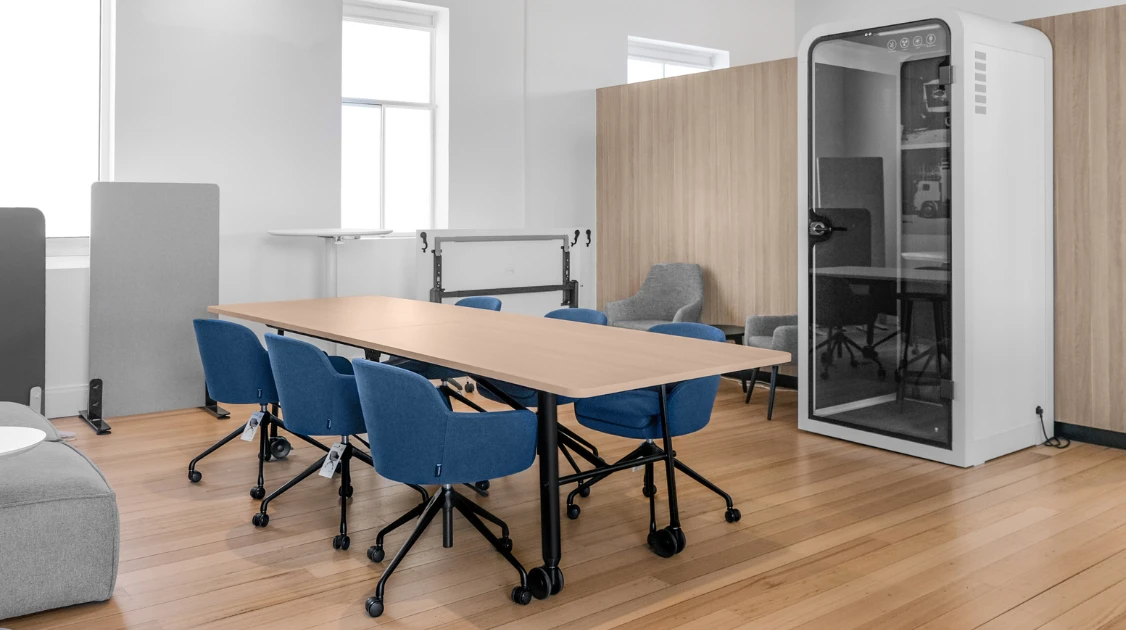
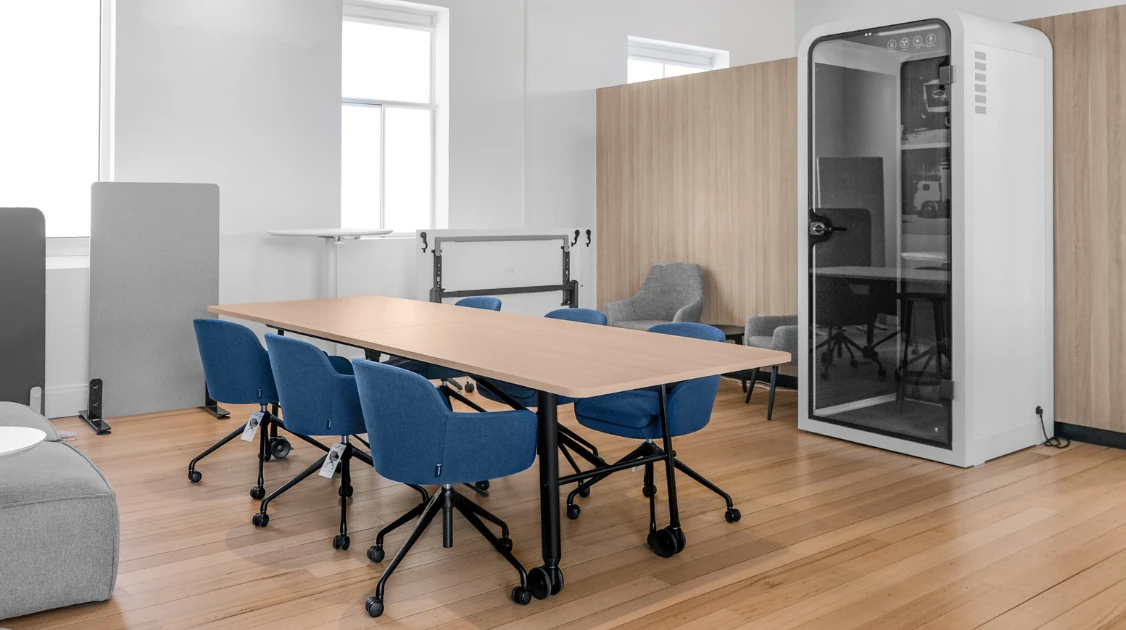
- Collaboration is planned, not incidental. Shared zones are positioned and scaled to support workshops, teamwork and project activity rather than relying on leftover meeting space.
- Layouts are designed to adapt. Modular planning and flexible furniture allow workplaces to evolve as teams, headcount and work styles change over time.
.webp)